
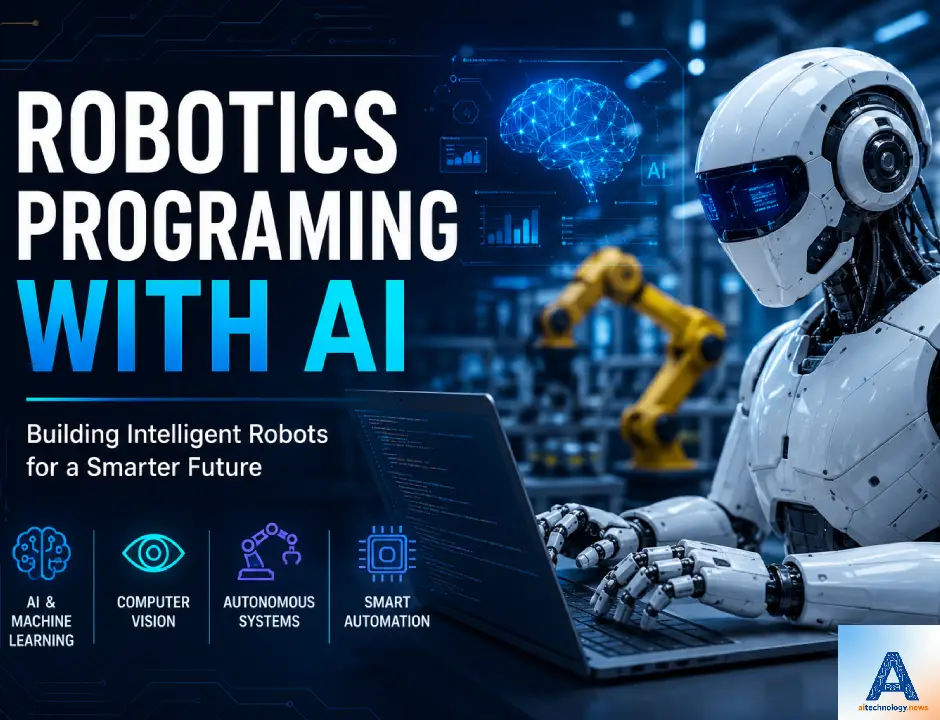
Robotics Programming with AI: How Intelligent Automation is Changing the Game
Introduction
Combining Artificial Intelligence (AI) with robotics unlocks some genuinely incredible possibilities. We are seeing this play out everywhere—from busy warehouse floors and massive factories to modern hospital wings and our own living rooms. Traditional robots were hardwired to repeat the exact same motions based on rigid, pre-programmed instructions. Today’s AI-driven machines, however, are a completely different breed. They can learn, adapt, make split-second decisions, and interact with their surroundings in ways that used to be strictly science fiction.
AI robotics programming has quickly become one of the fastest-growing spaces in tech. It blends software engineering, machine learning, computer vision, and physical automation to build machines that tackle increasingly complex tasks. As companies push for deeper digital transformation, the demand for intelligent robotics is only going to climb.
Let’s dive into how AI robotics programming actually works, the core technologies driving it, the go-to languages, and where this field is heading next.
Robotics Programming with AI
What Exactly is Robotics Programming with AI?
Fundamentally, this field is about building machines that don’t just blindly execute loops. Instead, they learn from real-world data, recognize patterns, and make smart, independent choices.
Take classic industrial robotic arms. They are fantastic at assembling the exact same part in the exact same spot all day long. But if a component is even slightly out of place, the system grinds to a halt until a human steps in to fix it.
AI-powered robots bring much-needed flexibility to the table. They are capable of:
* Learning from past trials and experiences
* Navigating entirely new environments on the fly
* Identifying specific objects, tools, and people
* Understanding and responding to natural human speech
* Predicting outcomes to boost their own performance over time
By adding this layer of intelligence, developers can build highly adaptable machines capable of handling messy, unpredictable real-world situations with ease.
The Core Tech Driving AI Robotics
Machine Learning (ML)
Instead of relying entirely on hard-coded rules, Machine Learning lets robots learn on the job. This helps them find patterns, make smarter choices, and optimize their daily tasks. For instance, warehouse bots can analyze past trips to figure out the absolute fastest paths to move inventory.
Deep Learning
This advanced branch of machine learning uses neural networks modeled after the human brain. It is the secret sauce behind heavy-duty tasks like image recognition, speech processing, and autonomous navigation. Because deep learning can process massive amounts of sensory data, it has become essential for modern robotics.
Computer Vision
Computer vision essentially gives robots eyes. By reading data from cameras and sensors, robots can identify objects, track movement, and run quality checks. On a factory line, for example, a vision-equipped robot can spot tiny manufacturing defects much faster and more reliably than any human inspector.
Natural Language Processing (NLP)
NLP is what allows robots to understand and talk back to us. We see this in voice-activated smart assistants, interactive customer service bots, and healthcare assistants. It bridges the gap between human language and machine code, making interactions feel way more natural.
Reinforcement Learning
Think of this as teaching a robot through trial and error. The system gets a metaphorical “reward” for making a correct decision and a “penalty” for a wrong one. Over time, it learns the absolute best strategy to get the job done. It is widely used to train self-driving cars, navigate tough terrain, and master complex automation tasks.
The Go-To Programming Languages for AI Robotics
Python
Python is the undisputed king of AI development. It is incredibly easy to read and write, has a massive developer community, and comes packed with powerful, ready-to-use libraries like TensorFlow, PyTorch, and OpenCV. If you are working on machine learning or computer vision, Python is almost always your starting point.
C++
When you need raw speed and direct control over hardware, C++ is still the gold standard. It executes tasks incredibly fast, processes data in real time, and manages memory efficiently. Many robotics use C++ for safety-critical systems where even a millisecond of lag is unacceptable.
Java
Java is known for its stability and cross-platform compatibility. It is often the language of choice for massive, enterprise-level industrial automation setups and large-scale robotic infrastructures.
ROS (Robot Operating System)
While not a programming language itself, ROS is a crucial framework that almost everyone in the industry uses. It provides the low-level drivers, communication tools, and software libraries developers need so they do not have to build their robotic systems entirely from scratch.
How AI Robots Get Built: Step-by-Step
Step 1: Pinning Down the Goal
Every project starts with a clear problem to solve, whether that is creating an autonomous delivery cart, automating a messy warehouse, or designing a surgical assistant.
Step 2: Gathering the Data
AI is hungry for data. Developers must gather high-quality information from cameras, sensors, GPS trackers, and user inputs to give the AI something to learn from.
Step 3: Training the AI Model
Using that gathered data, engineers train machine learning algorithms to perform specific tasks, like recognizing an obstacle or understanding a voice command.
Step 4: Connecting Software to Hardware
This is where the magic happens. The trained AI model is integrated with physical components like motors, micro controllers, and cameras so the robot can actually interact with the physical world.
Step 5: Testing and Tweaking
Finally, the system goes through rigorous testing to make sure it is safe, fast, and reliable. Developers continuously tweak the algorithms to boost performance over time.
Real-World Uses for AI Robots
Manufacturing
Factories are still the biggest testing grounds for smart robotics. AI bots handle everything from fast-paced assembly lines to predictive maintenance, which alerts teams before a machine breaks down.
Healthcare
AI is making waves in medicine. We now have surgical robots assisting with precision operations, rehabilitation bots helping patients recover, and automated delivery systems moving supplies through hospital hallways.
Logistics and Warehouses
Giant retailers rely on AI robots to organize inventory, sort packages, and optimize shipping routes, which drastically cuts down on delivery times.
Smart Farming
Agriculture is getting a high-tech upgrade. Smart bots can monitor crop health, spot weeds, harvest delicate produce, and analyze soil conditions to help farmers grow more food with fewer resources.
Self-Driving Vehicles
Autonomous cars and drones are some of the most advanced AI robots out there. They blend computer vision, sensor fusion, and real-time decision-making to safely navigate busy streets and skies.
Smart Homes
On the consumer side, AI is showing up in everyday household gadgets. Devices like smart vacuum cleaners and security bots adapt to your daily routines and navigate around your furniture with ease.
The Big Benefits of AI Robotics
*Top-Tier Efficiency:** These robots can run 24/7 without needing coffee breaks, keeping productivity high.
*Fewer Mistakes:** Machine learning algorithms help eliminate human error, ensuring high precision on repetitive tasks.
*Lower Costs:** Automating complex processes reduces labor expenses and minimizes material waste.
*Safer Workplaces:** Handing dangerous jobs in hazardous environments over to robots keeps human workers out of harm’s way.
*Non-Stop Learning:** Unlike old machines that stay the same forever, AI robots actually get better and smarter the more they work.
The Challenges We Still Face
It isn’t all smooth sailing. Developing these advanced systems is incredibly expensive, requiring massive budgets for both high-end hardware and specialized talent. They also need clean, high-quality data to work properly. On top of that, we have to navigate serious ethical issues around job displacement, data privacy, and general safety when these machines operate alongside humans.
What’s Next? Future Trends to Watch
*Cobots (Collaborative Robots):** Instead of being locked behind safety cages, these friendly bots are built to work right alongside human coworkers.
*Edge AI:** By processing data directly on the robot instead of sending it to the cloud, robots can react instantly and keep data more secure.
*Swarm Robotics:** Imagine a whole flock of simple robots communicating with each other to tackle massive tasks like search-and-rescue missions or complex mapping.
*Better Human Interaction:** Future bots will be much better at reading our gestures, voice tones, and even facial expressions for a more natural connection.
Career Outlook
Thanks to this boom, the job market is wide open. Companies are actively hunting for skilled robotics engineers, machine learning specialists, computer vision pros, and software developers. If you have a foot in both the AI and hardware worlds, you are in a prime position to build a great career.
Wrapping Up
AI-driven robotics is easily one of the most exciting fields of our time. By combining cutting-edge software with physical machines, we are building systems that can think, adapt, and solve real problems on their own. While we still have to figure out the high costs and ethical guardrails, there is no denying that smart automation is here to stay. The future isn’t about machines replacing us—it’s about working together to build a smarter, more efficient world.
#RoboticsProgramming #ArtificialIntelligence #AIRobotics #RobotProgramming #MachineLearning #Automation #ComputerVision #DeepLearning #PythonProgramming #ROS #AutonomousRobots #SmartRobots #IndustrialAutomation #Technology #FutureTech