What is AI Technology? Over the past decade, artificial intelligence has shifted from a science fiction concept to an everyday tool we barely notice. From unlocking smartphones with facial recognition to receiving personalized recommendations on Netflix, this technology is everywhere. But what is ai technology, and how does it actually impact us? Let’s look past the hype to see how this innovation works.
If you search for a basic artificial intelligence definition, it is simply a branch of computer science focused on building smart machines. These systems are capable of performing tasks that usually require a human mind, such as learning, reasoning, and solving complex problems.
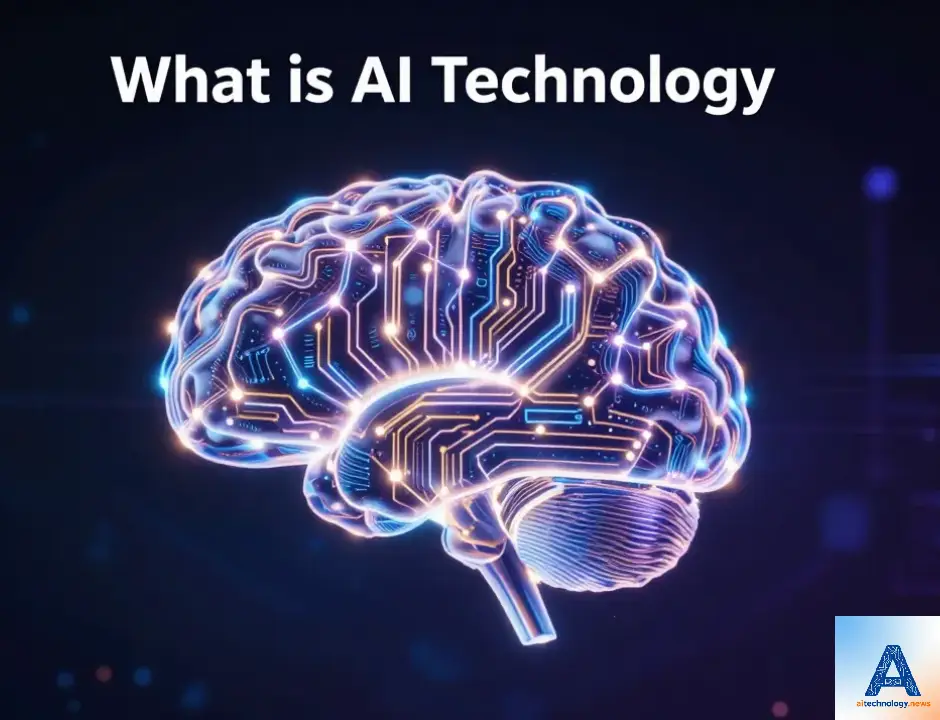
What is AI Technology?
Unlike traditional computer programs that follow strict rules, these systems analyze data to spot patterns and make independent decisions. To truly understand this field, we must examine machine learning vs deep learning. People often mix these terms up, but they represent different layers of technology. First, AI itself is the broad umbrella. It covers any machine designed to mimic human behavior. Second, machine learning is a subset of AI. It involves feeding a computer training data so it can improve its performance over time.
For example, a spam filter learns what junk mail looks like by analyzing millions of actual emails. Third, deep learning goes even further. It uses complex virtual networks inspired by the human brain to process information. Finally, generative AI is a newer branch of deep learning. It does not just analyze existing files; it actually creates brand-new content, like images or written text. AI does not think or feel like a human. Instead, it relies on three basic elements: data, algorithms, and computing power.
Data acts as the fuel. A computer needs thousands of examples, like images or text files, to start learning. The algorithm is the set of mathematical rules that helps the system correct its mistakes. Powerful computer chips make it possible to run these calculations incredibly fast. When discussing the types of AI, experts usually group them into three levels: Narrow AI, General AI, and Super intelligence.
Narrow AI is what we use today. It is built to perform one specific job well, like playing chess or recommending a song. General AI is a future goal where machines can perform any intellectual task a human can do. Super intelligence is a hypothetical future where machines become smarter than humans in every way. AI is already changing how we work and live. In medicine, AI in healthcare helps doctors spot diseases on scans earlier and more accurately. In finance, systems monitor millions of transactions to stop fraud instantly. In manufacturing, smart machines predict when equipment might break, saving time and money.
As AI grows, it brings serious challenges. If a system is trained on biased human data, it will repeat those same biases. There are also concerns about job automation and the difficulty of explaining how complex systems make decisions. However, the future of AI is not about replacing people. Instead, it will likely focus on collaboration, where smart tools help us do our jobs better. What is ai technology at its core? It is a powerful tool designed to process data and solve complex problems. By understanding how it works, we can better prepare for a world where humans and smart machines work side by side.
Conclusion
So, what is AI exactly? At its core, it’s easily the most powerful tool humanity has ever built. It’s basically the science of teaching machines to learn from experience—letting them solve problems, create new things, and crunch data on a scale we’ve never seen before. Naturally, it’s not completely smooth sailing. We have some serious hurdles to clear, from ethical dilemmas and built-in biases to shifting job markets, all of which need some smart guardrails.
But the upside is honestly mind-blowing. AI has the potential to help us cure diseases and tackle climate change, driving the next big wave of human progress. At this point, figuring out how AI works isn’t just for tech gurus anymore; it’s something we all need to get a grip on to navigate the world we’re living in.